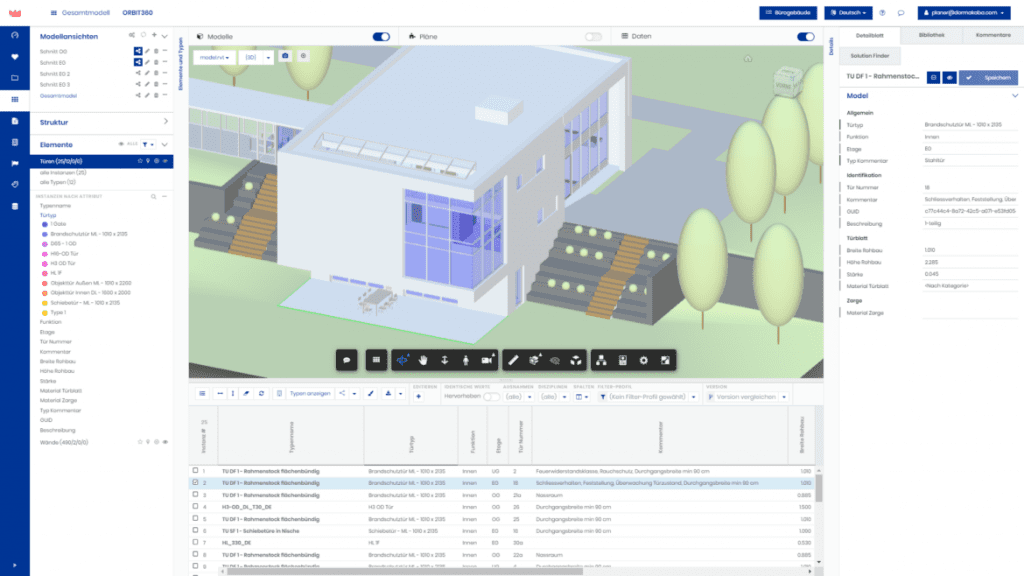
Ein Bauprojekt zu planen und zu koordinieren, ist eine Mammutaufgabe für alle Planungsbeteiligten. Das Management und die Verteilung von Daten ist dabei das zentrale Element einer erfolgreichen Planung. Ein CDE (Common Data Environment) hilft allen Projektbeteiligten, diese Informationen zentral verfügbar zu haben. Diese Idee greift dormakaba mit dem EntriWorX Ecosystem und seinen digitalen Planungstools auf.
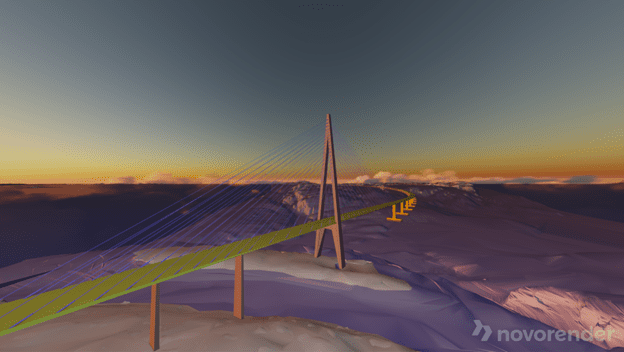
Thousands of companies have a lot of 3D data that they simply do not know how to put to use. The reason for this is that displaying all BIM related data is very expensive, often has to be done on very costly computers, is difficult to share while offering poor version control and workflow.
Novorender is a Norwegian based company that has developed a fully automated cloud service (SaaS) for BIM, which allows customers to upload, merge, view, share and distribute (giant and complex) 3D models, Point Clouds and Orthophotos, of any size, easily via the browser. The platform allows users to upload different 3D formats without manual conversion or simplification of data, and is used for projects ranging from design and development to operations and maintenance.
This is a product that has not previously been possible, as there was simply no technology that allowed this way of consuming 3D. Before now.
This seemingly easy question can prove to be quite a tough nut to crack when it comes to choosing the right software for your business. On the one hand, for many, the answer is simple and one can finish these considerations fairly quickly. I can expose myself to quite a few users, but it should be said loudly that REVIT is not BIM. Which of course does not change the fact that it is an extremely good and popular tool.
Let’s try to look at a few issues related to your software needs and requirements before you decide to spend a lot of money on licenses for your company.
The following points can help you, whether you are going to finally abandon 2D flat drawings in favor of 3D BIM models, or you just want to switch to another software.
In the previous part we looked into five of the most common mistakes while performing IFC export. This entry encompasses five next. Together they create an “Ultimate list of IFC export failures” 😉
As in previous article, to underline the versatile ways to achieve the same results, I used screenshot examples from a range of software programs as well as different projects, models and disciplines.
Exactly. Given that the term BIM itself includes a reference to object information modeling, it means that the more information we include in the model, the better. After all, this is what we want the model to be the source of information about the building and structure. How else would we be doing all this BIM? More and more often we come across designs based on a model (non-drawing). What does this mean in terms of information? Nothing more or less that the information so far contained in the drawings (dimensions, descriptions, texts, etc.), cannot simply disappear. They have to be added somewhere. The best place is the model. . The question is: how much of this information should be included in the model? Could there be a situation where this information is simply too much and it will be unreadable and too confusing?
How does the contract type affect the level of BIM implementation?
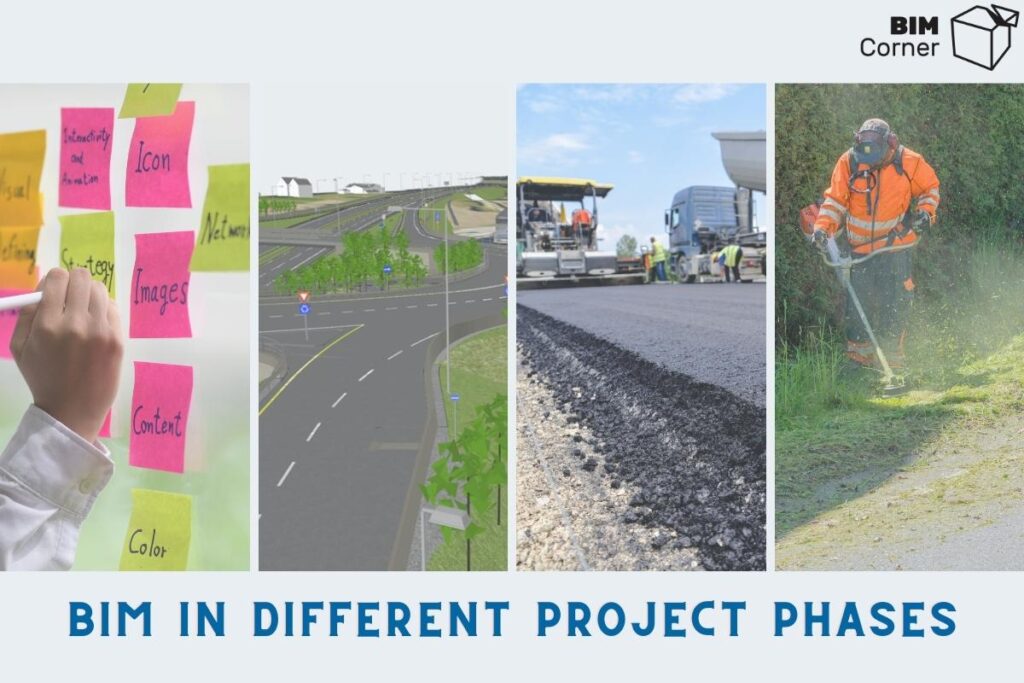
The BIM methodology in construction investments has been used for over a decade. However, the level of its implementation differs from project to project. An important factor affecting the scope of BIM use is the type of construction contract.
A construction contract, through its form, may encourage or discourage the use of new technologies / innovative solutions.
In this article, I would like to present the basics related to the type of construction contracts and how their formula may affect the use of BIM in the project.
I invite you to read!
On the BIM Corner blog, we usually write technical articles related to the BIM methodology and new technologies implemented in the construction industry. This one will be a bit different. I wanted to devote this article to the “soft part” related to the work in the AEC industry.
We live in a very dynamically developing professional environment. At work, AEC specialists are often under pressure where more things are required from them.
Being productive and efficient at work is the superpower of today’s professional life. A lot has been told already about productivity. There are tons of books and courses about it.
In this post, I wanted to share MY approach to this topic. I won’t be modest: I consider myself a productive and well-organized person. In over 10 years of my professional career, I have learned a lot about being effective and how to get things done in various positions.
I hope my tips will give you valuable insights and contribute to the improvement of your productivity at work…… Ready? Let’s get started.
This entry presents a practical exercise we have done on the Stavanger University Hospital project when we evaluated the possibility of moving towards IFC4. I will present our assumptions, performed tests and results. In the end a conclusion and answer to the headline question.
The Architectural Engineering Construction (in short: AEC) market plays a crucial role in the economy since it connects both science and industry. However, a lack of productivity growth and neglected investment in digitalisation negatively impacts the construction industry. Young engineers prefer to work in more digital developed industries than work in the same way as it was 20-30 years ago. It seems that change is inevitable. It’s likely that engineers will be required to do a wider range of tasks in the future than they are doing right now. The interesting questions are: what will be the work of future engineers due to emerging technologies? What will engineers of future look like, and how will they meet the demands of tomorrow’s society? Let’s take a look.
In 2021 our moods were swinging like a giant pendulum. Together with the news connected to pandemics. From hope at the beginning of the year through restlessness in spring with the question of why it all takes so long, to full bloom in summer and autumn ending again in depression when Omicron showed up. Businesses were reacting in the same way. From full closure, through partial reopening to full closure again.